
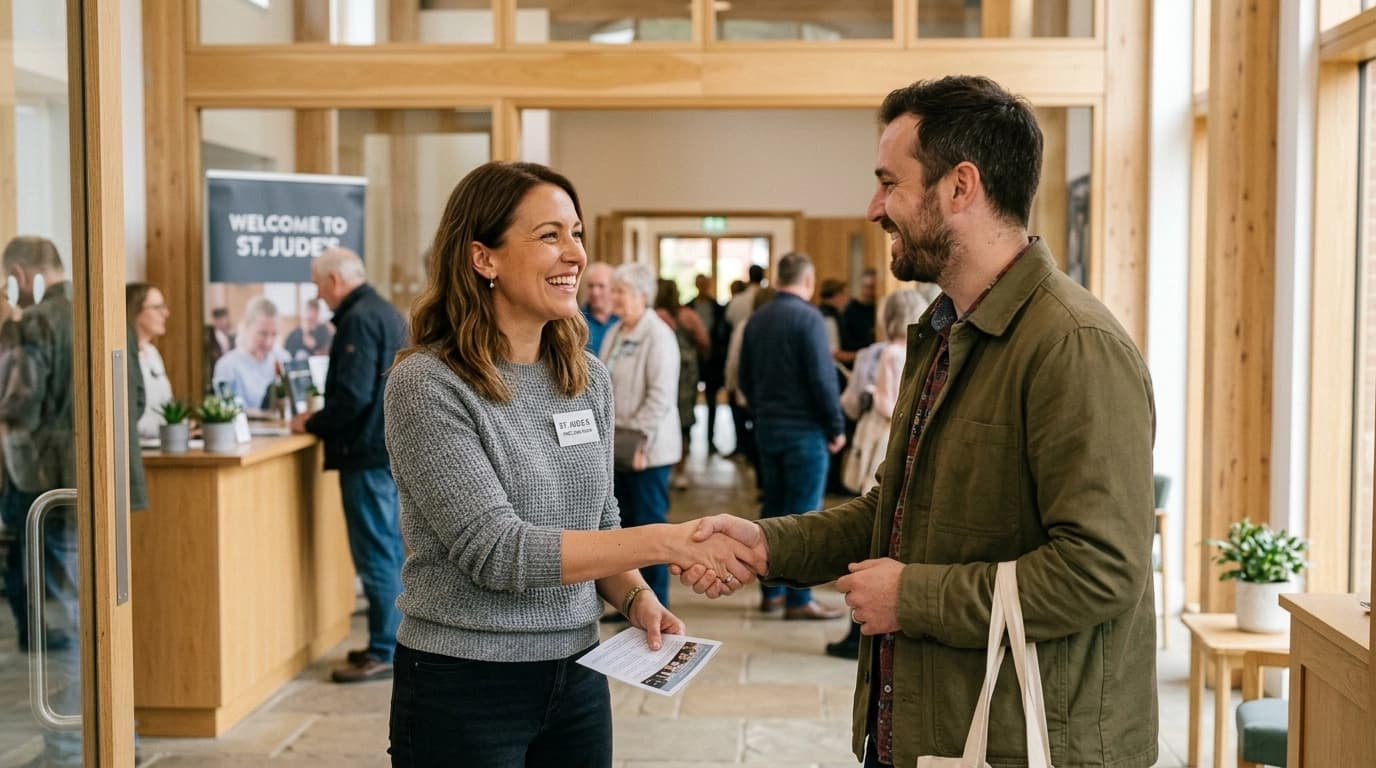
It’s Monday morning. You’re sitting at your desk with a mug of tea, and there it is. The pile.
A handful of paper visitor cards from yesterday’s service. Some are slightly damp from a spilled glass of water. On one, the handwriting is so faint you can’t quite tell if it’s a ‘7’ or a ‘1’. On another, the visitor forgot to leave their surname.
You want to reach out. You want them to feel known and welcomed. But right now, you’re just trying to decipher an email address before you can even begin to say hello.
For years, the humble paper connect card has been the backbone of church hospitality in the UK. But lately, things are changing. Across the country, churches are moving toward digital follow-up systems. Not because they want to be "high-tech," but because they want to be more human.
The struggle with the scrap of paper
We’ve all been there. A visitor fills out a card, drops it in a basket, and... then what?
The journey from the pew to the pastor's desk is often a long and perilous one. Cards get left in pockets. They sit on the sound desk for three days. By the time someone actually sits down to type those details into a spreadsheet, it’s Thursday.
By then, the "magic" of the Sunday visit has faded for the visitor.
Paper is physical, which feels personal, but it’s also fragile. It’s a "broken link" in the chain of hospitality. When a visitor gives us their details, they are handing us a small piece of trust. They’re saying, "I’d like to be known here." When we lose that card: or take five days to read it: that trust can start to feel a little misplaced.
Why digital feels (surprisingly) more hospitable
There is a common worry that moving to digital forms or QR codes feels a bit corporate. A bit "business-like."
But consider this: what is more welcoming?
- Asking a guest to hunt for a working pen and scribble on a card in a crowded row.
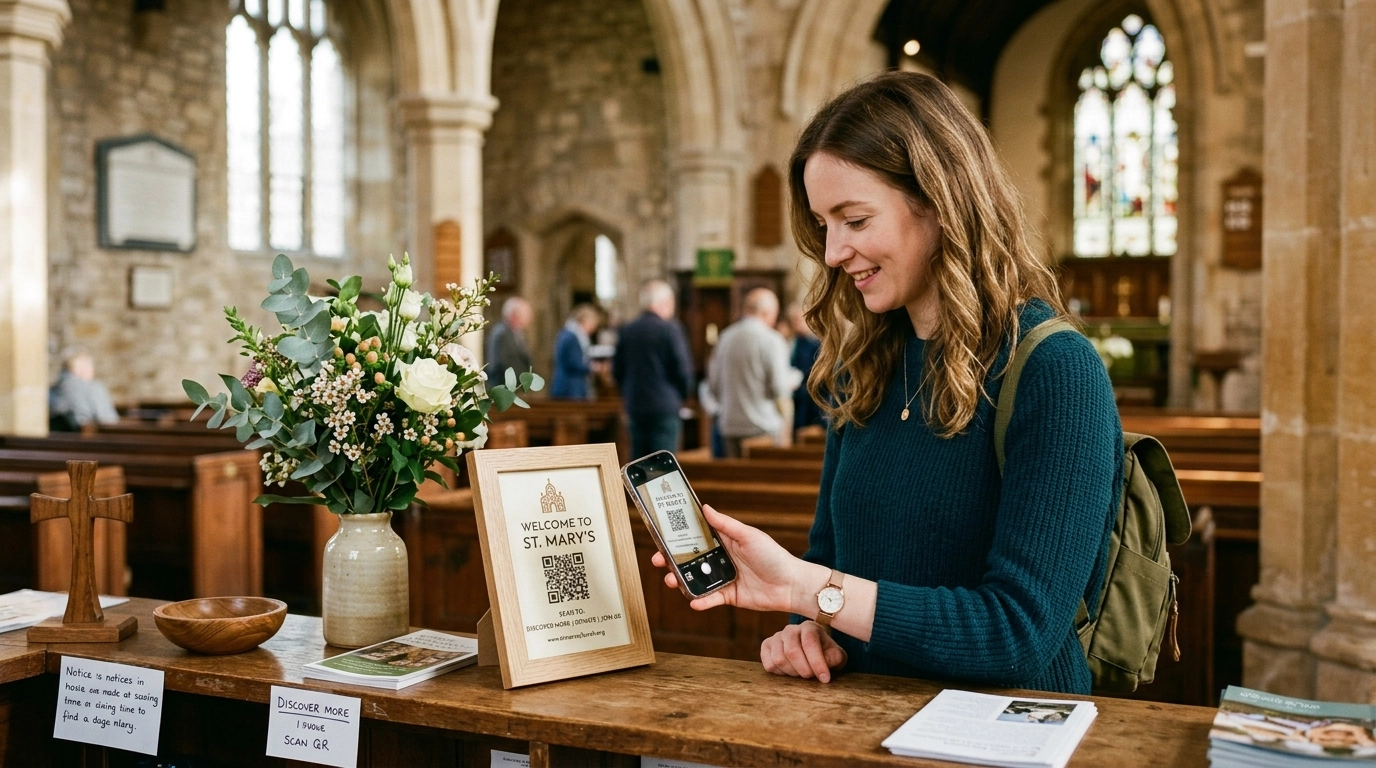
- Letting them scan a simple code on their own phone, where they can type accurately and easily, knowing their information is going straight to the right person.
Digital follow-up isn't about replacing the handshake or the conversation. It’s about making sure that once the conversation ends, the connection doesn't.
1. The gift of accuracy
We’ve all spent ten minutes trying to guess if a visitor's email ends in .com or .co.uk. When a visitor types their own details into a simple form, that problem disappears. You get the right name, the right number, and the right email address. Every time. It sounds small, but it removes the "awkward" factor from your first follow-up message.
2. The Tuesday morning calm
When your church visitor follow up is digital, there is no manual data entry. None. The information flows directly from their phone into your system.
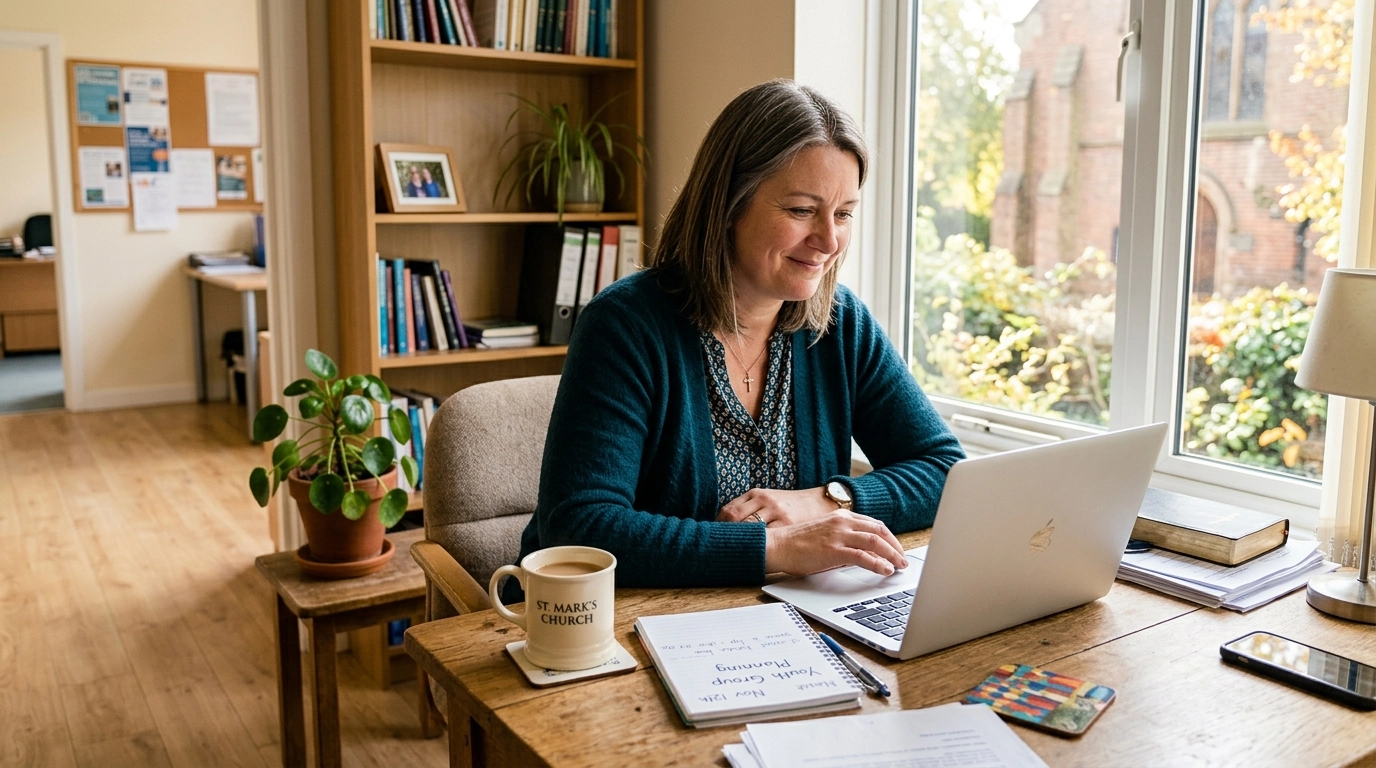
Imagine starting your Tuesday morning not by typing out names from scraps of paper, but by seeing a tidy list of who visited, what they’re interested in, and who on your team is already looking after them. It takes the "chaos" out of the admin and leaves more room for the ministry.
Keeping people from falling through the cracks
The real reason most UK churches are making the switch is simple: they don’t want to lose people.
In a paper-based world, follow-up is often a series of "I thought you were doing that" moments. One person has the card, another person sends the emails, and a third person organises the welcome lunch. Without a central place for everyone to look, it’s easy for someone to be forgotten.
When you follow up church visitors using a digital system, everyone is on the same page. You can see at a glance:
- Did they get the "Thanks for coming" SMS?
- Have they been invited to the newcomers' coffee?
- Did anyone call them to answer that question about the youth group?
It turns a scattered process into a calm flow.
Making the transition gently
If your church has used paper for thirty years, switching to digital overnight might feel jarring. The key is to do it with warmth and care.
Don't hide the paper entirely. Keep a few cards at the welcome desk for those who aren't comfortable with technology. But for the majority of your guests, a QR code on the back of the seat or a simple link on the screen is actually more convenient.
Keep it simple. Your digital form shouldn't look like a tax return. Just a few fields: name, contact info, and maybe a "how can we pray for you?" box. The goal is to open a door, not build a database.
Explain the 'Why'. When you mention the digital form from the front, tell people why it’s there. "We'd love to stay in touch, and this is the easiest way for us to make sure we get your details right and get back to you quickly." It shows you value their time and their information.
A better way to follow up
At Church Loop, we’ve seen how much pressure church leaders are under. You’re juggling a dozen different things, and the last thing you need is a complicated "CRM" that feels like a full-time job.
That’s why we built our platform to be a calm, quiet partner in your ministry. Our visitor follow-up journeys weave SMS, email, and tasks into one simple timeline. When someone fills out a custom form on their phone, they aren't just a row in a spreadsheet. They become a "person profile": a story you can follow, ensuring that no one falls through the cracks.
Our goal isn't to give you more "data." It’s to give you more time to be with your people.
The end of the "Lost Card" era
Are paper cards dead? Not quite. They still have a place for some. But for the modern church leader who wants to lead a calm, effective team, digital follow-up is a breath of fresh air.
It means less time squinting at handwriting and more time sending thoughtful, personal messages. It means a welcome team that feels confident, not overwhelmed. And most importantly, it means that when a new person walks through your doors, they are met with a follow-up process that is as warm and reliable as the welcome they received at the door.
Hospitality is about making people feel at home. And nothing says "we care about you" quite like a simple, timely, and personal "hello" on a Monday afternoon.
Want to see how simple church follow-up can be? Explore Church Loop and see how we help UK churches stay connected without the chaos. From visitor journeys to event management, we bring everything into one calm flow( starting at just £29/month.)